The best Scrunch alternative depends on whether you need AI-ready site work, source and citation analysis, lower-cost monitoring, or enterprise reporting. Scrunch is not just positioned as an AI rank tracker. Its public pages emphasize AI search monitoring, citation/source analysis, page audits, AI bot traffic, and AI Experience Platform work.
This comparison is for buyers searching for Scrunch alternatives, Scrunch AI alternatives, and AI visibility tools with adjacent workflows. The useful question is what you want after the tool finds a visibility gap: a page audit, a source-gap diagnosis, a content recommendation, an executive report, or a simple monitoring dashboard.
Public home and pricing pages were first reviewed on June 29, 2026. Pricing for AthenaHQ, Profound, and Evertune was updated on October 26, 2026; other plan details are from the original review. The pricing sections below summarize visible plan details, with emphasis on page-audit capacity, prompt volume, AI surfaces, users, and exports.
Best Scrunch alternatives by use case
| Use case | Best fit | Why |
|---|---|---|
| Enterprise AI visibility reporting | Profound | Stronger fit when executive reporting and competitive brand measurement matter most. |
| Broad AI visibility platform comparison | AthenaHQ | Good comparison when you still want a serious AI visibility platform with public plan context. |
| Tracking plus optimization recommendations | Rankscale | Better fit when the team wants AI presence tracking to become an optimization queue. |
| Lower-cost AI search monitoring | OtterlyAI | Public pricing makes it easier to test repeated AI search monitoring. |
| AI customer journey intelligence | Evertune | Useful when AI visibility is part of a broader customer journey and brand intelligence problem. |
| Dashboard-style AI search visibility | ZipTie | Clear public pricing and focused AI search intelligence positioning. |
| Enterprise generative marketing platform | Bluefish AI | Relevant when the buying team is evaluating AI-era marketing beyond website readiness. |
For adjacent comparisons, see the Rankscale alternatives, Profound alternatives, and AthenaHQ alternatives articles. This page uses Scrunch as the baseline, so the evaluation centers on site readiness, citations, AI bot traffic, and page-level work.
Where Clare Videre fits
Clare Videre is the lean AI visibility monitoring option in this market. It is for B2B SaaS teams that want to bring their own buyer prompts, run them daily, track which brand is mentioned in the most replies for each prompt, measure mention share, and see the URLs and domains AI systems consulted for each answer.
It belongs on the shortlist when Scrunch's site-readiness workflow is more than you need and the first priority is monitoring prompts, competitors, mentions, and consulted sources, especially if you want to prove the workflow before an enterprise procurement cycle. It is not the right fit when you need a broad customer journey intelligence suite, agency client workspaces, or enterprise media-intelligence workflows.
Public pricing snapshot
AthenaHQ, Profound, and Evertune pricing was checked on October 26, 2026; the other entries are from June 29, 2026. The useful comparison is not just the monthly price; it is how many prompts, AI engines, users, audits, exports, and support options are included.
| Tool | Public pricing | What that buys |
|---|---|---|
| AthenaHQ | Essential offers $25 in introductory credits (300 credits); Starter at $295/month; Enterprise custom | Starter includes 3,600 monthly credits, multiple AI models, integrations, CSV export, and content optimization. API access and extra credits are paid add-ons. |
| Profound | Free seven-day brand Trial; Enterprise custom | Trial runs 50 prompts daily across ChatGPT, Gemini, and Google AI Overviews. Enterprise offers tailored prompt tracking and up to nine answer engines. |
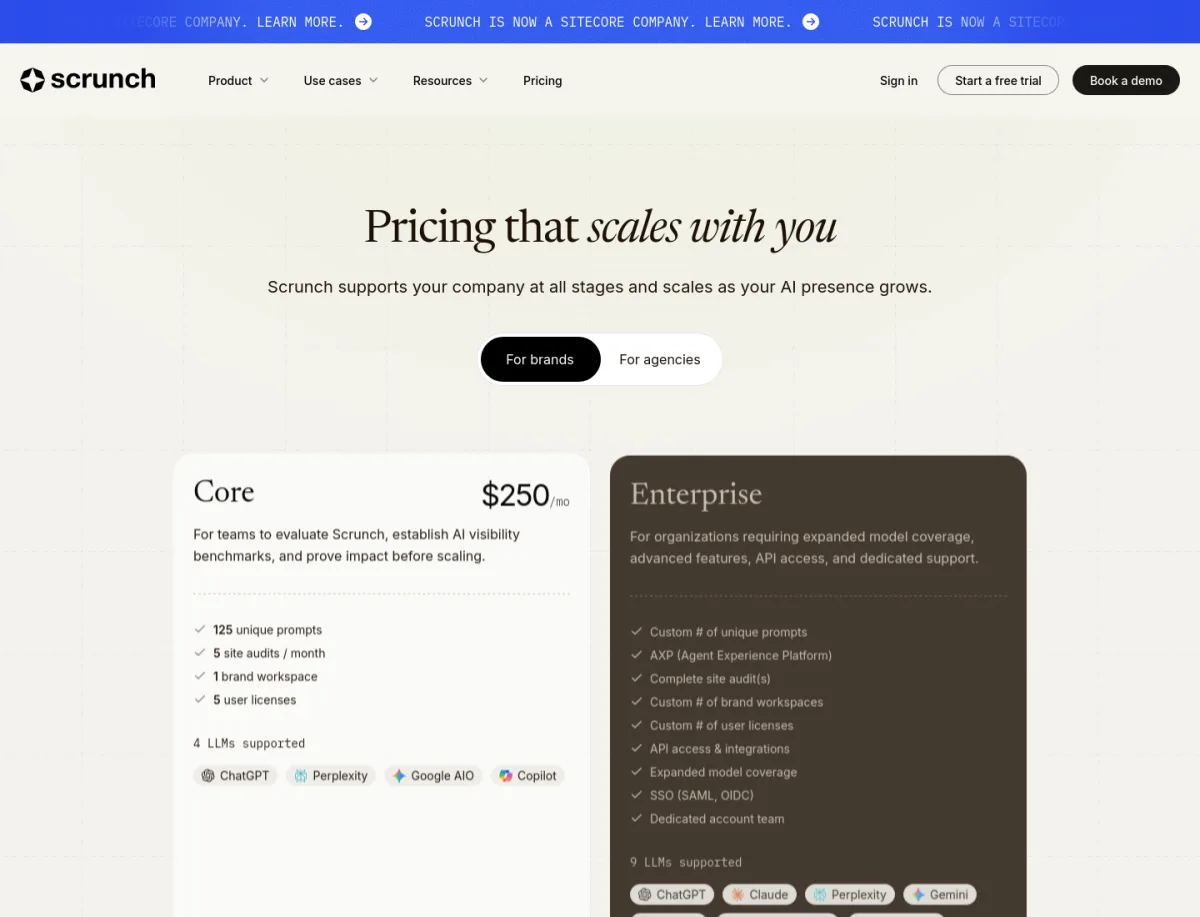
| Scrunch | Starter at $250/month billed annually or $300 month-to-month; Growth at $417/month billed annually or $500 month-to-month; Enterprise custom | Starter includes 350 custom prompts, 1,000 industry prompts, 3 personas, 5 page audits, 3 user licenses, and a 7-day trial. |
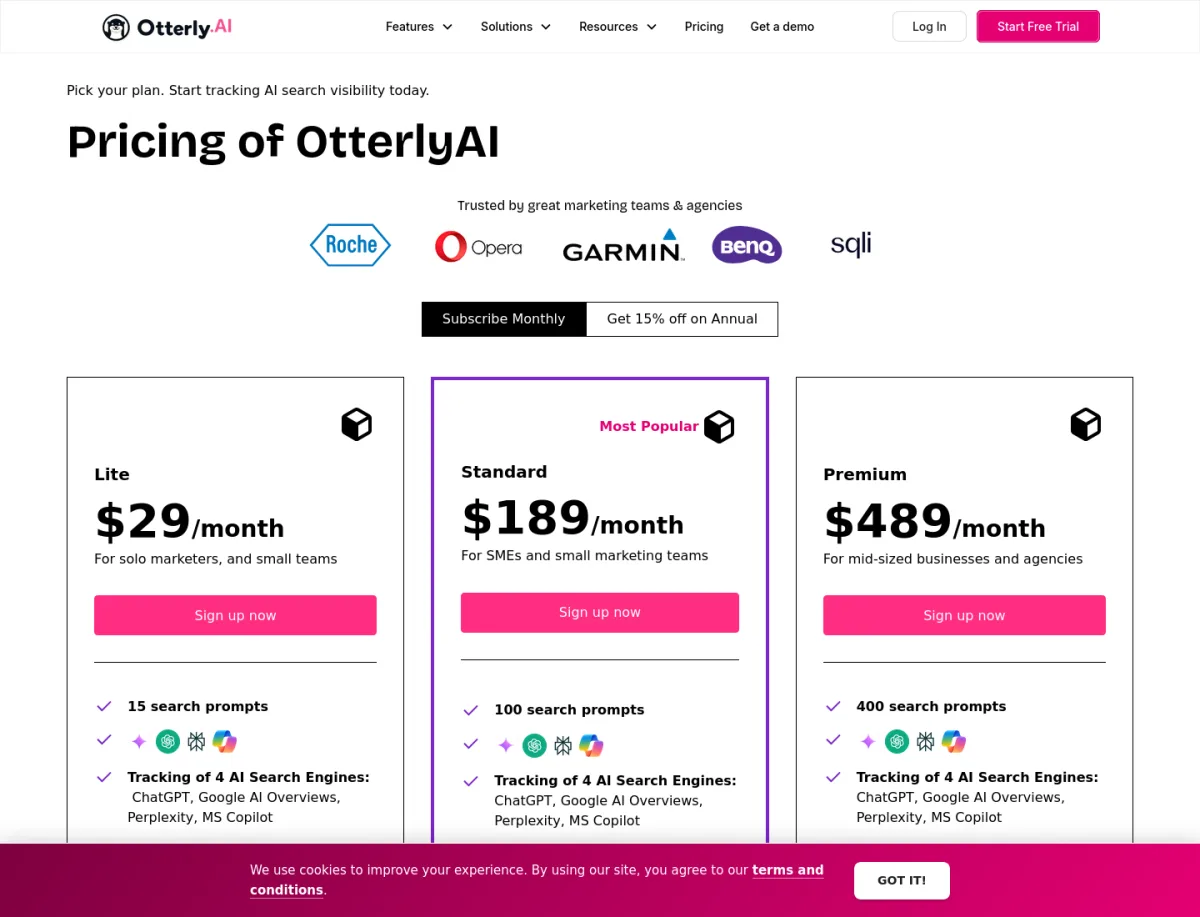
| OtterlyAI | Lite at $29/month monthly or $25/month annual; Standard at $189/month monthly or $160/month annual; Premium at $489/month monthly or $422/month annual | Lite starts with 15 search prompts and four AI search engines; higher plans add more prompts, API access, MCP, audits, and reporting capacity. |
| Rankscale | Essentials from $20/month, Pro at $99/month, Growth at $385/month, Enterprise at $780/month | Pro includes 1,200 credits, up to 4,800 AI responses, 10 brand dashboards, 50 page audits, unlimited search terms, and broad AI engine coverage. |
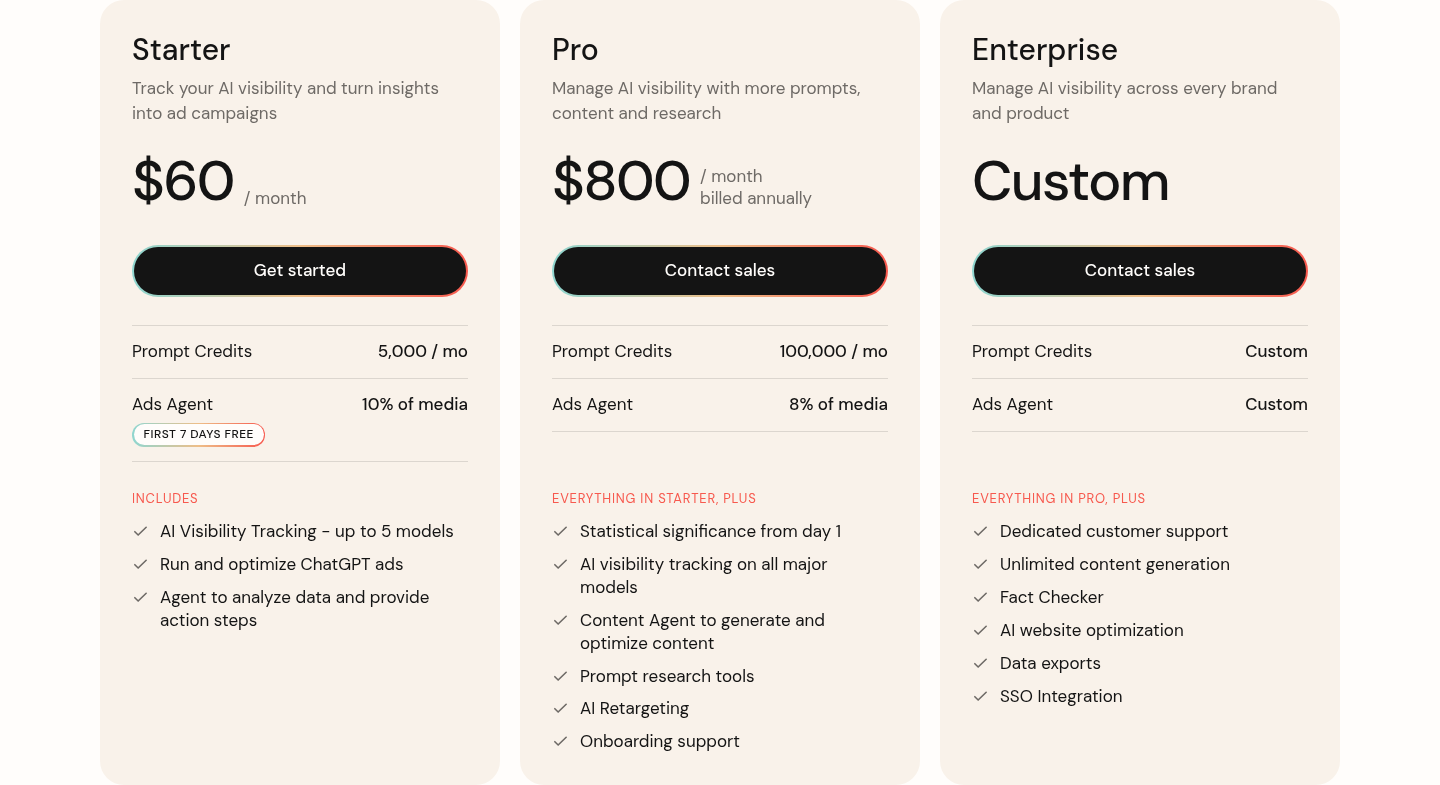
| Evertune | Starter at $60/month; Pro at $800/month billed annually; Enterprise custom | Starter includes 5,000 monthly prompt credits and up to five AI models. Pro includes 100,000 monthly prompt credits and up to 11 models. |
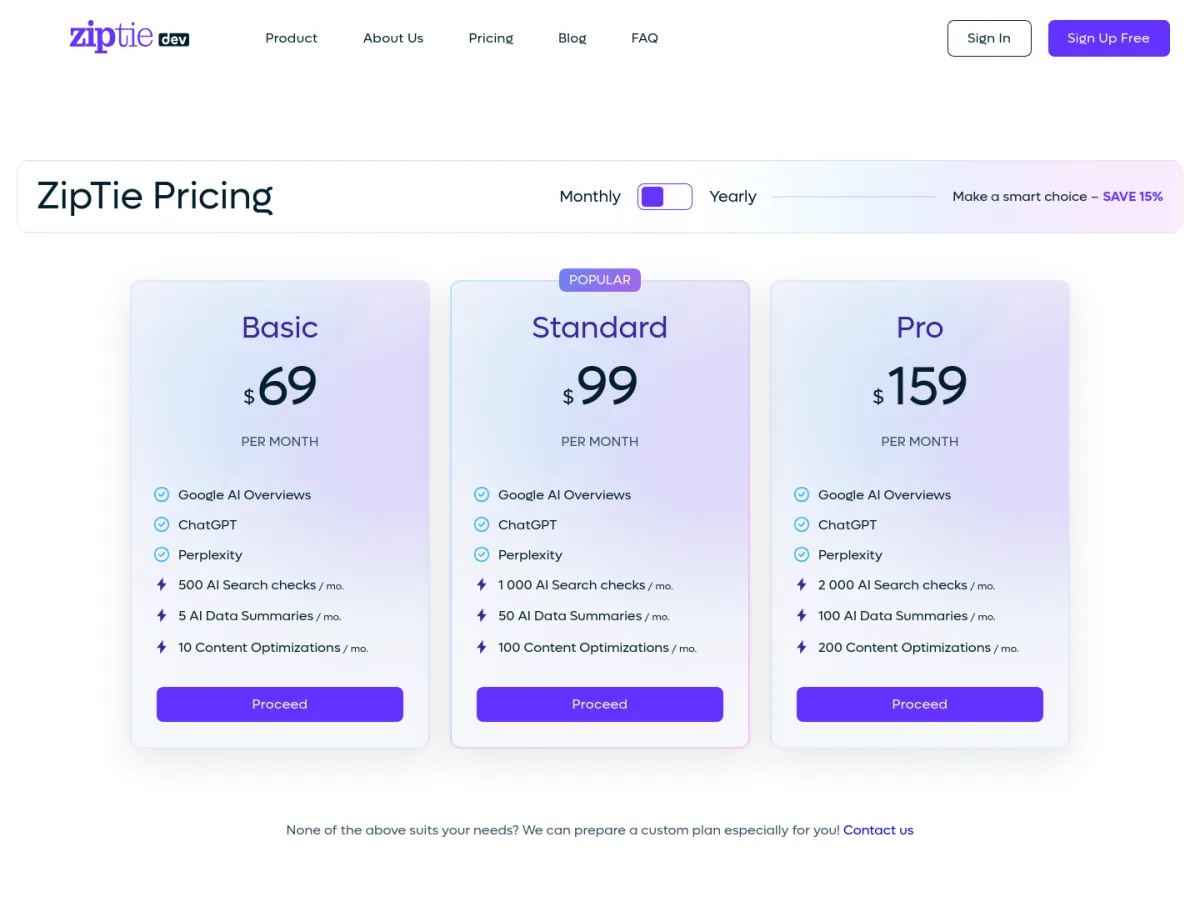
| ZipTie | Basic at $69/month, Standard at $99/month, Pro at $159/month | Basic includes 500 AI search checks per month across Google AI Overviews, ChatGPT, and Perplexity, plus data summaries and content optimizations. |
| Bluefish AI | No public pricing page found | Treat it as a sales-led enterprise evaluation rather than a self-serve pricing comparison. |
Use Scrunch as the site-readiness baseline
Scrunch is a useful baseline when the buyer wants to understand and improve how a website appears in AI search. Public messaging highlights monitoring brand visibility across AI platforms, analyzing citations and sources, measuring AI bot traffic, and auditing pages for AI readiness.
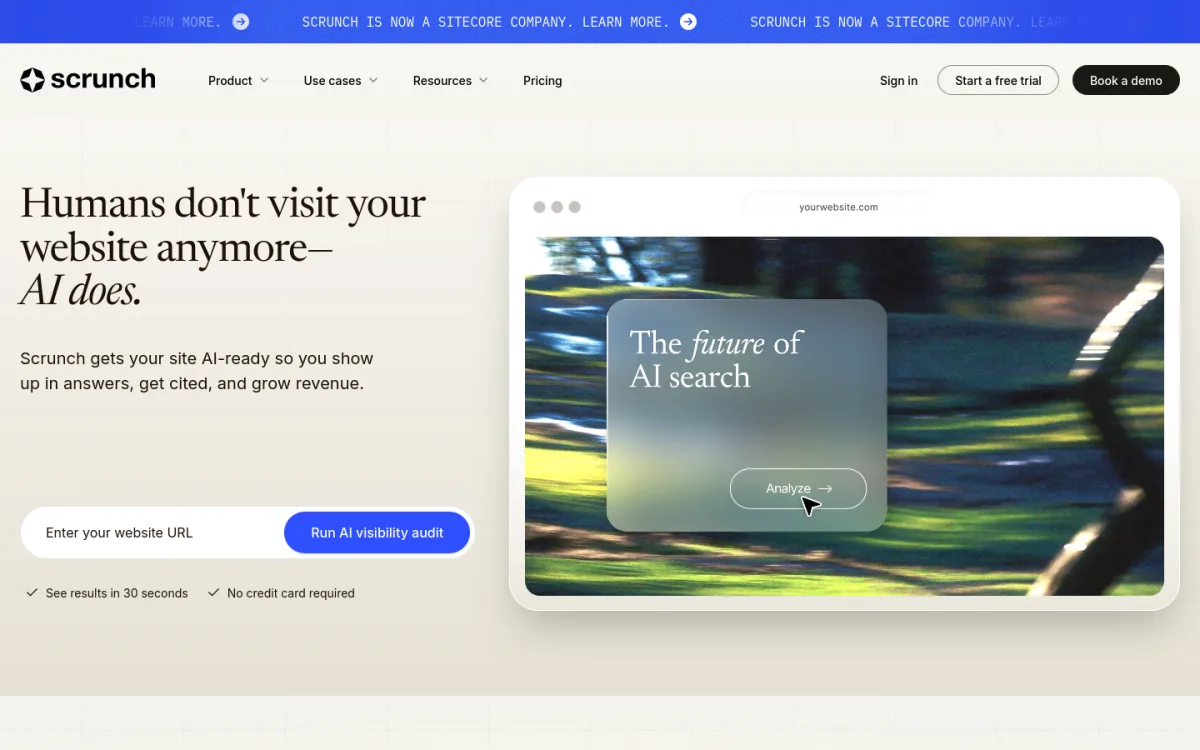
That means Scrunch alternatives should be evaluated on more than prompt coverage. Ask whether the tool can show which pages need better facts, which sources AI systems rely on, which competitors are mentioned most often for specific prompts, and whether AI bots are actually touching important pages.
What to look for in a Scrunch alternative
Does it inspect the page or only the answer?
A tool can tell you that a competitor appears in AI answers without explaining what to fix. A strong Scrunch alternative should connect answer visibility to crawlable page facts, citations, page structure, and source gaps.
Can it separate citations, sources, and AI bot traffic?
These are different signals. A citation shows what an AI answer references. A consulted source shows what may have influenced the answer. AI bot traffic shows which pages are being fetched. Do not treat them as one generic visibility metric.
Does it produce a real content backlog?
The output should be assignable: update this product page, clarify pricing, add comparison facts, improve documentation, earn third-party mentions, or create a source-worthy article. If the tool only says "increase visibility," it is not enough.
Is it priced for your stage?
If you are still proving AI visibility internally, public pricing and a small prompt set can matter more than enterprise reporting. If the buying group includes brand, legal, or enterprise marketing, governance and reporting may matter more than entry price.
Scrunch alternatives comparison
| Tool | Best for | Public pricing seen? | Main strength | Main caveat |
|---|---|---|---|---|
| Profound | Enterprise AI visibility reporting | Free trial; paid plans custom | Strong enterprise measurement and competitive intelligence positioning | May be more reporting-led than page-audit-led |
| AthenaHQ | Broad AI visibility platform comparison | Yes | Direct category comparison with public plan context | Validate site-readiness and page-level action depth |
| Rankscale | AI presence tracking with recommendations | Yes | Optimization framing is useful for content teams | Recommendation quality needs hands-on testing |
| OtterlyAI | Lower-cost AI search monitoring | Yes | Easier to test when monitoring is the main need | May not replace site-readiness or page-audit workflows |
| Evertune | Customer journey and brand intelligence | Yes | Broader than website readiness or prompt tracking | May be too broad for a focused GEO workflow |
| ZipTie | AI search visibility dashboard | Yes | Public pricing and focused AI search positioning | Validate page audits, sources, and exports |
| Bluefish AI | Enterprise generative marketing teams | No public pricing found | Broader enterprise marketing positioning | Less transparent without public pricing or plan limits |
1. Profound
Profound is the strongest Scrunch alternative when the buyer needs enterprise AI visibility measurement. It is a better fit when leadership needs competitive reporting across brands, prompts, and markets.
The tradeoff is workflow shape. Profound may be stronger for executive reporting, while Scrunch is more obviously framed around website readiness and AI search adaptation.

2. AthenaHQ
AthenaHQ is the direct platform comparison when you want AI visibility tracking but are not sure Scrunch's site-readiness angle is the best fit. It belongs on the shortlist for teams comparing serious AI visibility platforms.
Compare AthenaHQ and Scrunch by giving each vendor the same weak prompt group and asking what should change on the site. If one tool only reports the weakness and the other explains the source or page issue, that difference matters.

3. Rankscale
Rankscale is the alternative to test when recommendations matter more than site-readiness framing. It connects AI presence tracking with optimization work, which can be useful for content teams.
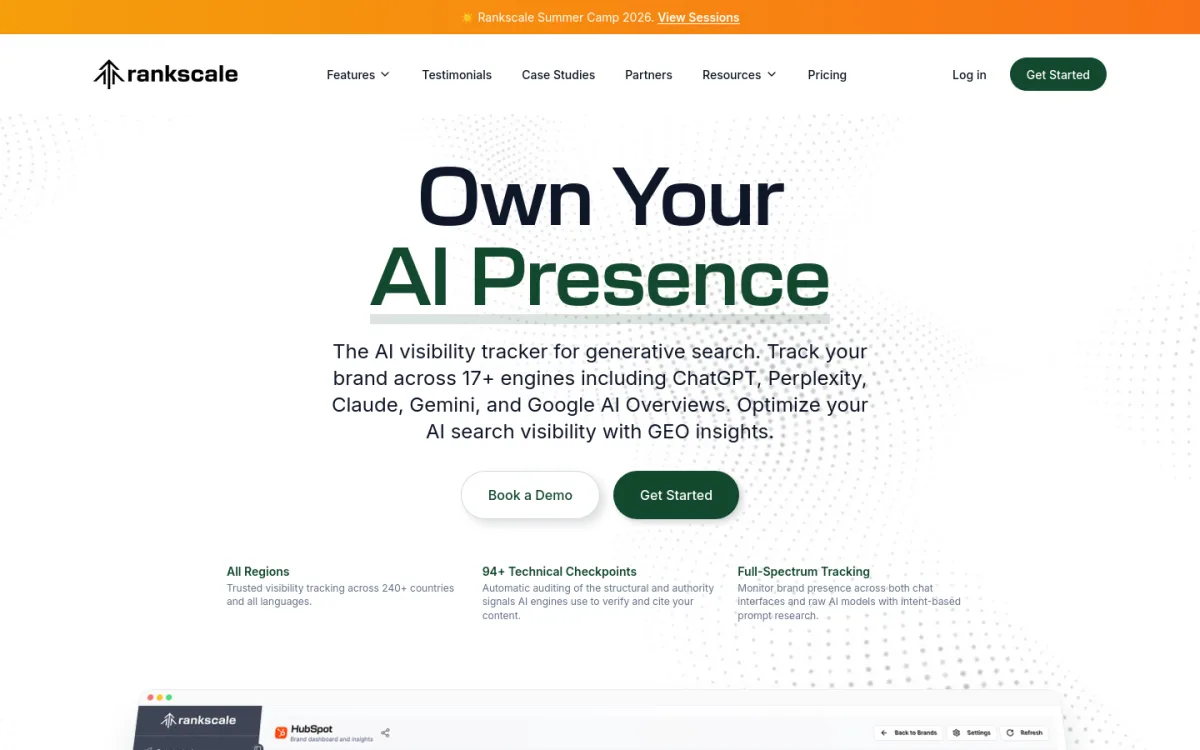
The buying test is recommendation quality. Ask whether the tool can name the page, the missing fact, the competitor source, and the action a content owner should take.
4. OtterlyAI
OtterlyAI is the lighter-weight option when the team mainly needs repeated AI search monitoring. It is easier to evaluate when public pricing and fast setup matter.
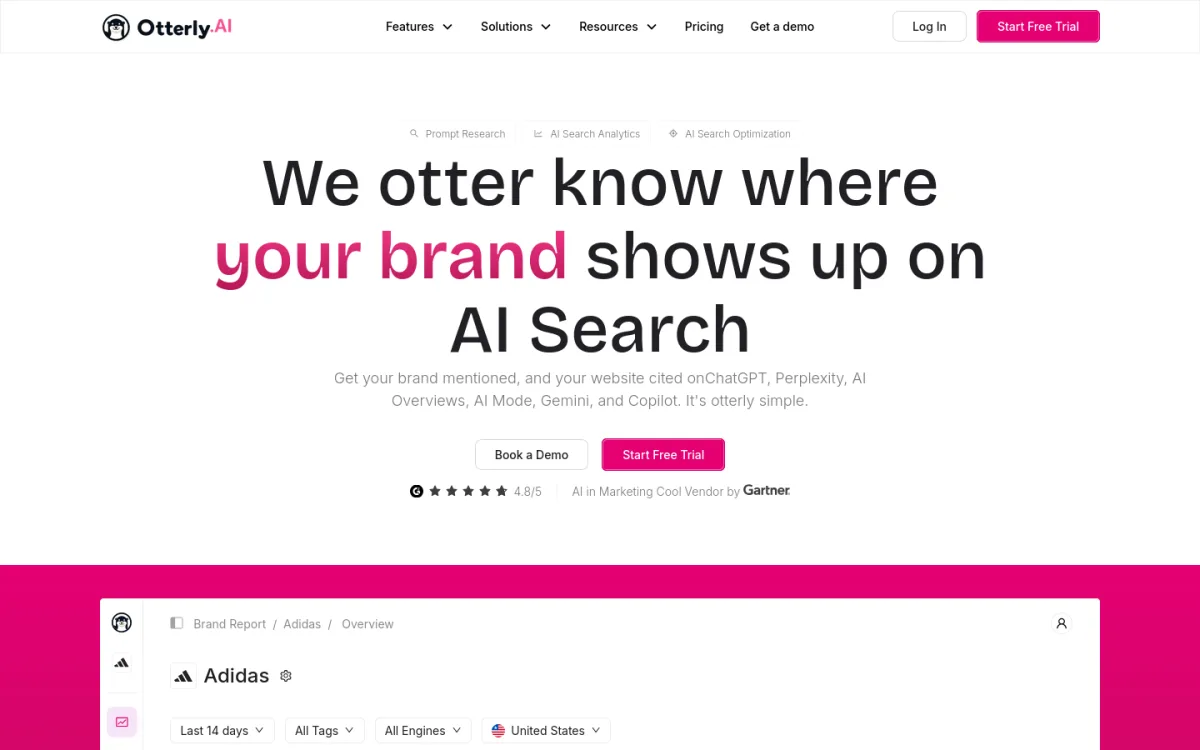
Do not assume monitoring replaces site-readiness work. If Scrunch appealed because of page audits, citations, sources, and AI bot traffic, validate whether OtterlyAI covers those jobs deeply enough.
5. Evertune
Evertune is a broader alternative when Scrunch feels too website-centric and the buyer is thinking about the AI customer journey. It fits better when brand, insights, advertising, or customer journey teams are involved.
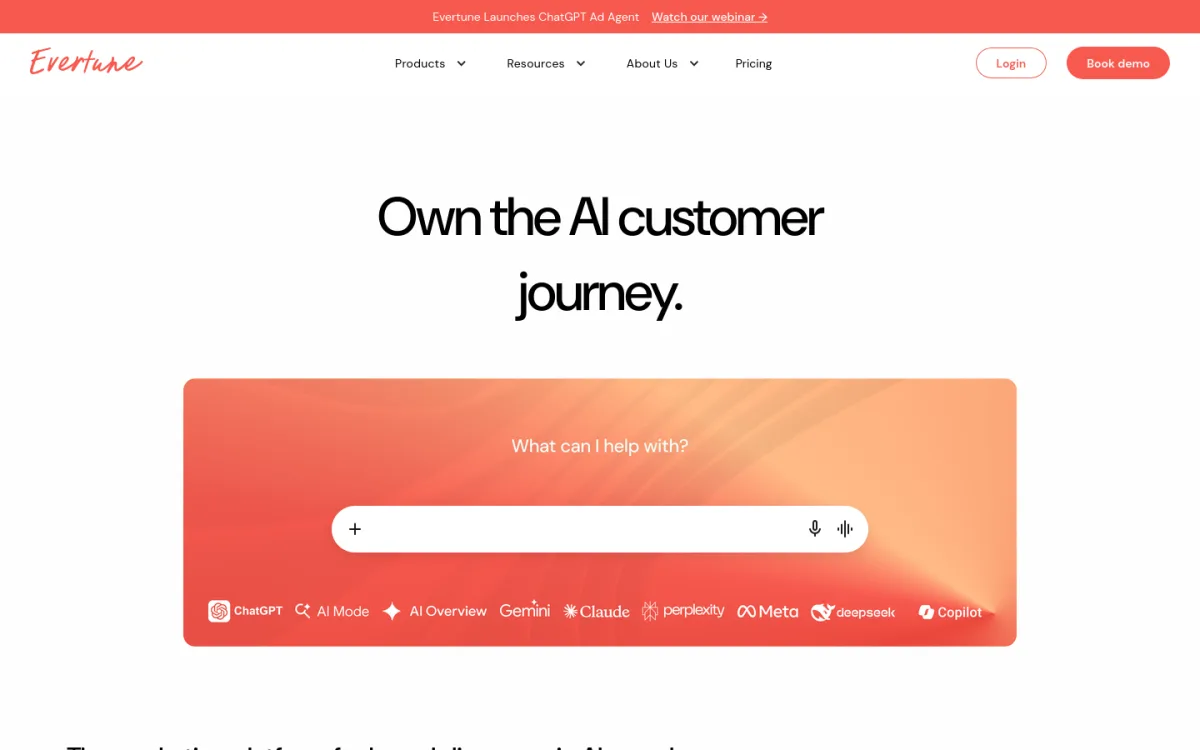
Use Evertune when the question is bigger than how a website appears in AI search. Skip it if the team only needs page audits and practical site updates.
6. ZipTie
ZipTie is another focused AI search visibility option. It is a reasonable shortlist candidate when you want public pricing and a narrower dashboard-style workflow.
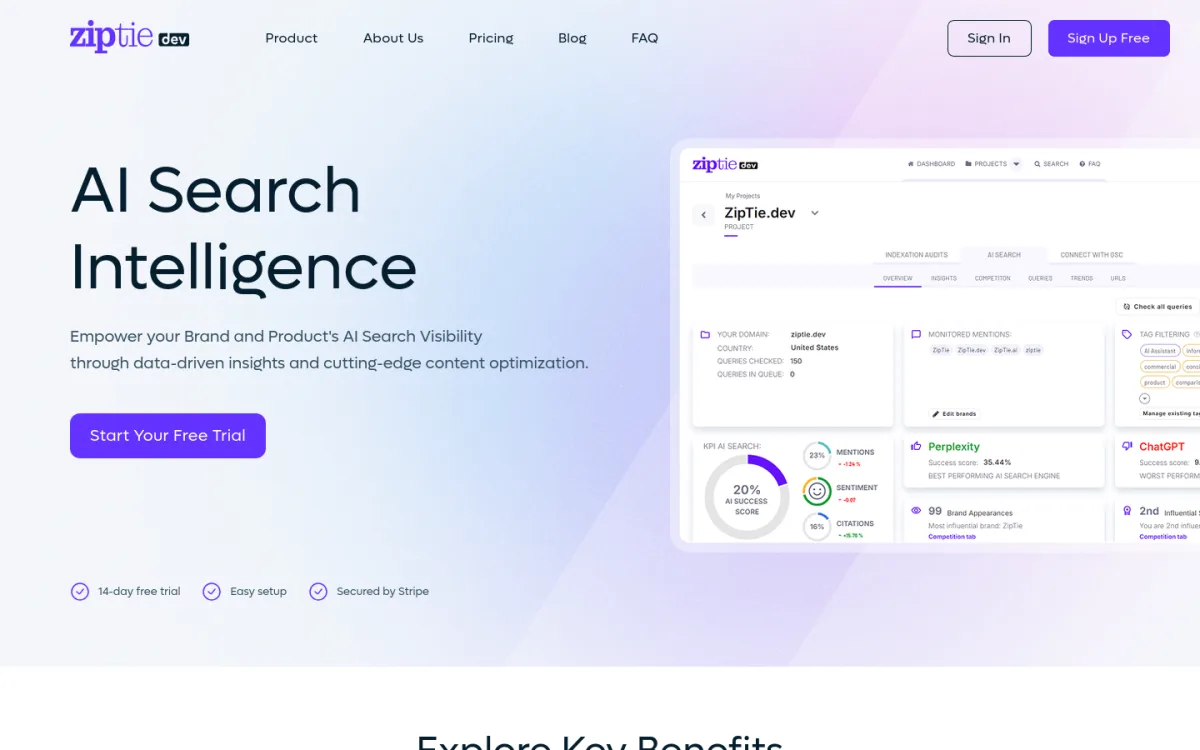
Validate whether ZipTie can answer the Scrunch-style questions: which sources influence answers, which pages need work, whether AI bots fetch important URLs, and how the team should prioritize fixes.
7. Bluefish AI
Bluefish AI is a broader enterprise marketing option. Public pricing was not visible, so it is less transparent for self-serve buyers.
Include Bluefish AI when the buying conversation is about generative marketing strategy, not only AI search visibility or site readiness. For transparent pricing and focused page-level workflows, move it later in the evaluation.
How to choose a Scrunch alternative
What to test in a demo or trial
Run each alternative against the same Scrunch site-readiness baseline prompt set. Do not accept a generic dashboard tour; ask the vendor to explain one weak prompt all the way from answer to source to recommended action.
- Import 20 buyer prompts split across category, use-case, competitor, alternative, pricing, and objection questions.
- Add the same five competitors and one market or country in every tool.
- Compare prompt winners (the brand mentioned in the most replies for each monitored prompt), mention share, cited or consulted URLs, and answer accuracy after repeated runs.
- Ask what changed on the website, comparison page, docs, or third-party source would improve the weakest prompt group.
- Export the report and check whether a founder, content lead, or executive can understand the next action without reading every answer.
If the website is the work, compare Scrunch and Rankscale first
Use the same weak prompt group and ask each tool to produce a page-level recommendation. The better output should name the page, missing fact, source gap, competitor pattern, and business reason for the update.
If leadership needs reporting, compare Profound and AthenaHQ
These are stronger candidates when AI visibility must become an executive reporting habit. Compare trend reporting, competitor coverage, exports, and whether the tool explains movement over time.
If budget is the constraint, compare OtterlyAI and ZipTie
Public pricing makes these easier to evaluate. Run a small prompt set for a month and decide whether the results create enough useful work to justify a broader platform.
If AI visibility is part of brand strategy, include Evertune and Bluefish AI
Broader platforms make sense when AI search visibility is one part of brand, journey, media, and customer intelligence. They may be the wrong shape for a team that only needs page audits.
Evaluation checklist
- Which AI systems does the tool track?
- Does it monitor prompts, citations, sources, and AI bot traffic separately?
- Can we bring our own prompt set?
- Can prompts be grouped by product, use case, market, country, and buyer persona?
- Can it identify which pages need clearer facts?
- Does it show which competitors are mentioned most often for specific prompt groups?
- Does it distinguish content, PR, documentation, pricing, and positioning actions?
- Can content teams turn the output into a backlog?
- Can leadership see trends without reading every prompt?
- Can we export reports and raw data?
- What limits apply to prompts, brands, users, markets, refreshes, history, and audits?
- How does the vendor update coverage when AI platforms change?
FAQ
What is the best Scrunch alternative?
Rankscale is the closest comparison when you want AI visibility to become optimization work. Profound and AthenaHQ are stronger for broad or enterprise reporting. OtterlyAI and ZipTie are easier to test when public pricing matters. Evertune and Bluefish AI are better fits when the problem is broader brand or marketing intelligence.
Is Scrunch mainly an AI visibility tool or a site-readiness tool?
Scrunch's public positioning spans both. It monitors AI search visibility, but it also emphasizes citations, sources, page audits, AI bot traffic, and AI experience work. That is why alternatives should be evaluated on site-level actionability, not only prompt tracking.
Should I choose a cheaper Scrunch alternative?
Choose a cheaper alternative if the main job is proving whether AI search monitoring is useful. Do not choose only on price if you need page audits, citation/source diagnosis, AI bot traffic analysis, or enterprise reporting.
What should I test before switching tools?
Test the same prompts, competitors, products, and pages in each tool. Then compare the diagnosis: what sources influenced the answer, which pages need work, whether AI bots fetched the right URLs, and whether the recommendation is specific enough to assign.
Final thoughts
Scrunch is a useful baseline when the buyer cares about AI search visibility and website readiness. The right alternative depends on what you need more of: enterprise reporting, optimization recommendations, lower-cost monitoring, or broader customer journey intelligence.
Use the same prompts and pages across every shortlisted tool. The best Scrunch alternative is the one that explains the gap clearly enough for your team to update the right page, source, or message.