The best Rankscale alternative depends on whether you need recommendations, monitoring, site-readiness work, or enterprise reporting. Rankscale is positioned around tracking and improving AI presence. That is useful for content and growth teams, but it is not the only shape this category takes.
This comparison is for buyers looking at Rankscale alternatives, Rankscale AI alternatives, and adjacent AI visibility tools. The practical question is whether your next decision is a content update, a competitor report, an executive visibility dashboard, a source-gap analysis, or a low-cost monitoring test.
Public home and pricing pages were first reviewed on June 29, 2026. Pricing for AthenaHQ, Profound, and Evertune was updated on October 26, 2026; other plan details are from the original review. The pricing sections below summarize visible plan details, with emphasis on AI platform coverage, recommendation capacity, page audits, and exports.
Best Rankscale alternatives by use case
| Use case | Best fit | Why |
|---|---|---|
| Enterprise AI visibility reporting | Profound | Stronger fit when the buyer needs executive reporting and enterprise brand measurement. |
| Direct AI visibility platform comparison | AthenaHQ | Good shortlist candidate when you still want a broad AI visibility platform with public plan context. |
| AI-ready site and content workflow | Scrunch | Better fit when the job is making a site clearer and more useful for AI search. |
| Lower-cost AI search monitoring | OtterlyAI | Public pricing makes it easier to test monitoring before investing in a broader platform. |
| AI customer journey intelligence | Evertune | Useful when AI visibility is part of a broader brand, insights, or customer journey problem. |
| Dashboard-style AI search visibility | ZipTie | Clear public pricing and narrower AI search intelligence positioning. |
| Enterprise generative marketing evaluation | Bluefish AI | Relevant when the buying team is evaluating AI-era marketing beyond search visibility. |
If you are still comparing the broad enterprise platforms, see the Profound alternatives comparison and the AthenaHQ alternatives comparison. This article uses Rankscale as the baseline, so the evaluation is centered on actionability.
Where Clare Videre fits
Clare Videre is the lean AI visibility monitoring option in this market. It is for B2B SaaS teams that want to bring their own buyer prompts, run them daily, track which brand is mentioned in the most replies for each prompt, measure mention share, and see the URLs and domains AI systems consulted for each answer.
It belongs on the shortlist when you want tracking that produces a simple monitoring habit before you invest in a heavier recommendation platform, especially if you want to prove the workflow before an enterprise procurement cycle. It is not the right fit when you need a broad customer journey intelligence suite, agency client workspaces, or enterprise media-intelligence workflows.
Public pricing snapshot
AthenaHQ, Profound, and Evertune pricing was checked on October 26, 2026; the other entries are from June 29, 2026. The useful comparison is not just the monthly price; it is how many prompts, AI engines, users, audits, exports, and support options are included.
| Tool | Public pricing | What that buys |
|---|---|---|
| AthenaHQ | Essential offers $25 in introductory credits (300 credits); Starter at $295/month; Enterprise custom | Starter includes 3,600 monthly credits, multiple AI models, integrations, CSV export, and content optimization. API access and extra credits are paid add-ons. |
| Profound | Free seven-day brand Trial; Enterprise custom | Trial runs 50 prompts daily across ChatGPT, Gemini, and Google AI Overviews. Enterprise offers tailored prompt tracking and up to nine answer engines. |
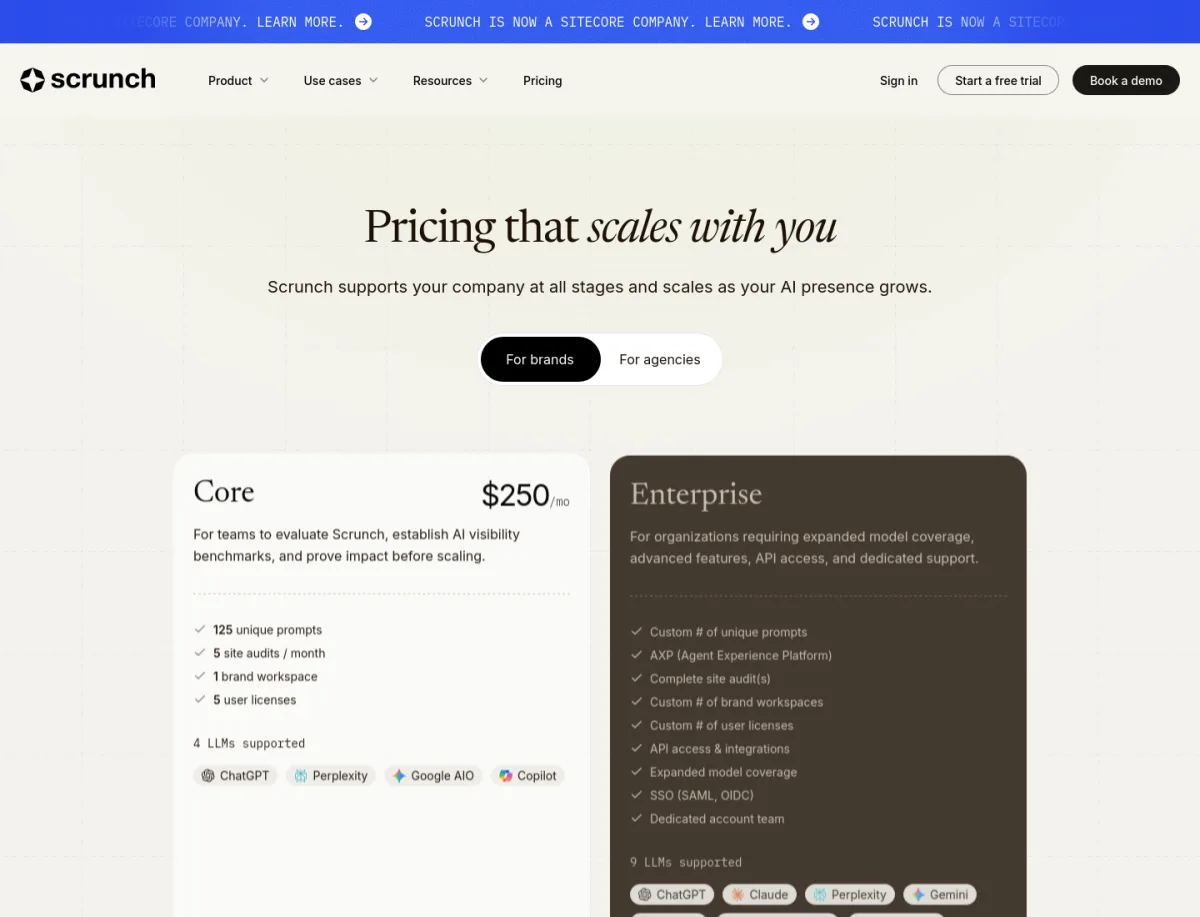
| Scrunch | Starter at $250/month billed annually or $300 month-to-month; Growth at $417/month billed annually or $500 month-to-month; Enterprise custom | Starter includes 350 custom prompts, 1,000 industry prompts, 3 personas, 5 page audits, 3 user licenses, and a 7-day trial. |
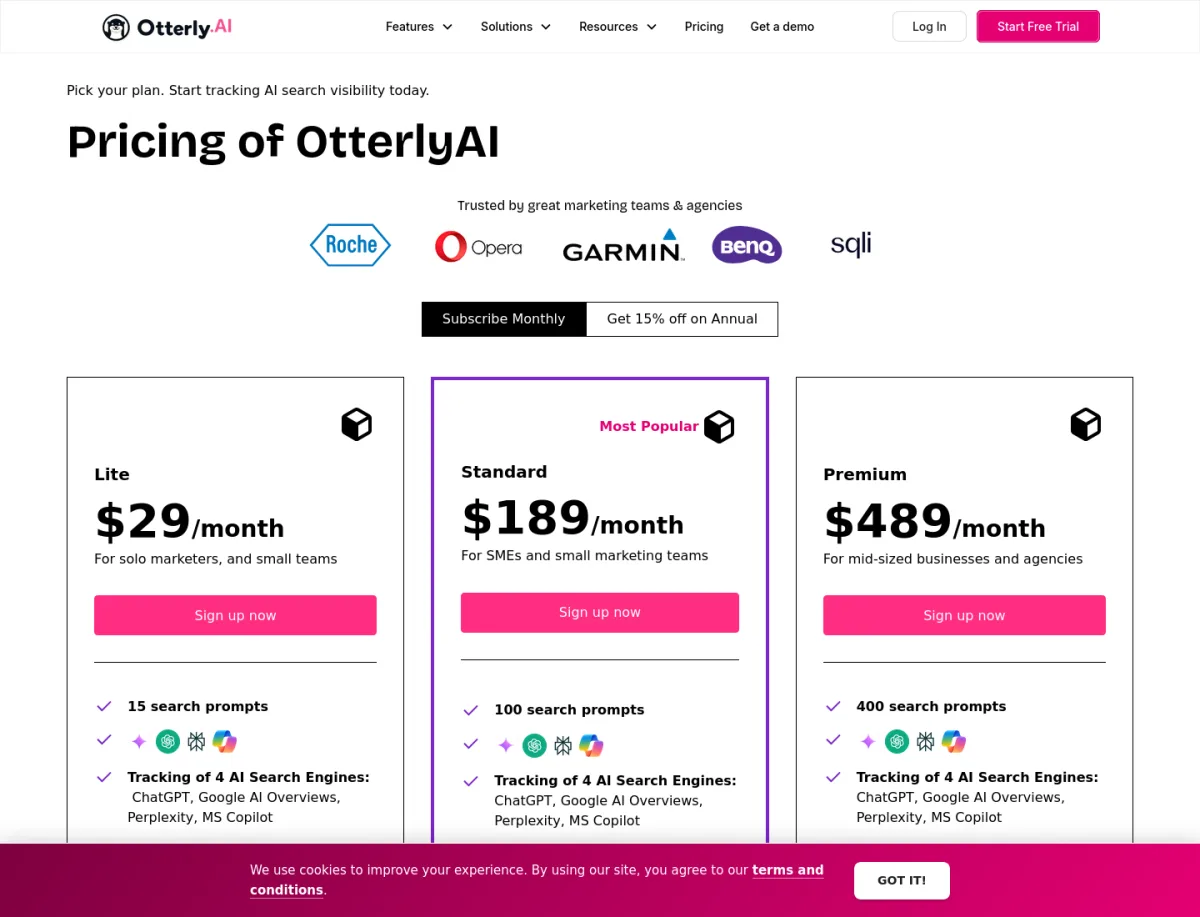
| OtterlyAI | Lite at $29/month monthly or $25/month annual; Standard at $189/month monthly or $160/month annual; Premium at $489/month monthly or $422/month annual | Lite starts with 15 search prompts and four AI search engines; higher plans add more prompts, API access, MCP, audits, and reporting capacity. |
| Rankscale | Essentials from $20/month, Pro at $99/month, Growth at $385/month, Enterprise at $780/month | Pro includes 1,200 credits, up to 4,800 AI responses, 10 brand dashboards, 50 page audits, unlimited search terms, and broad AI engine coverage. |
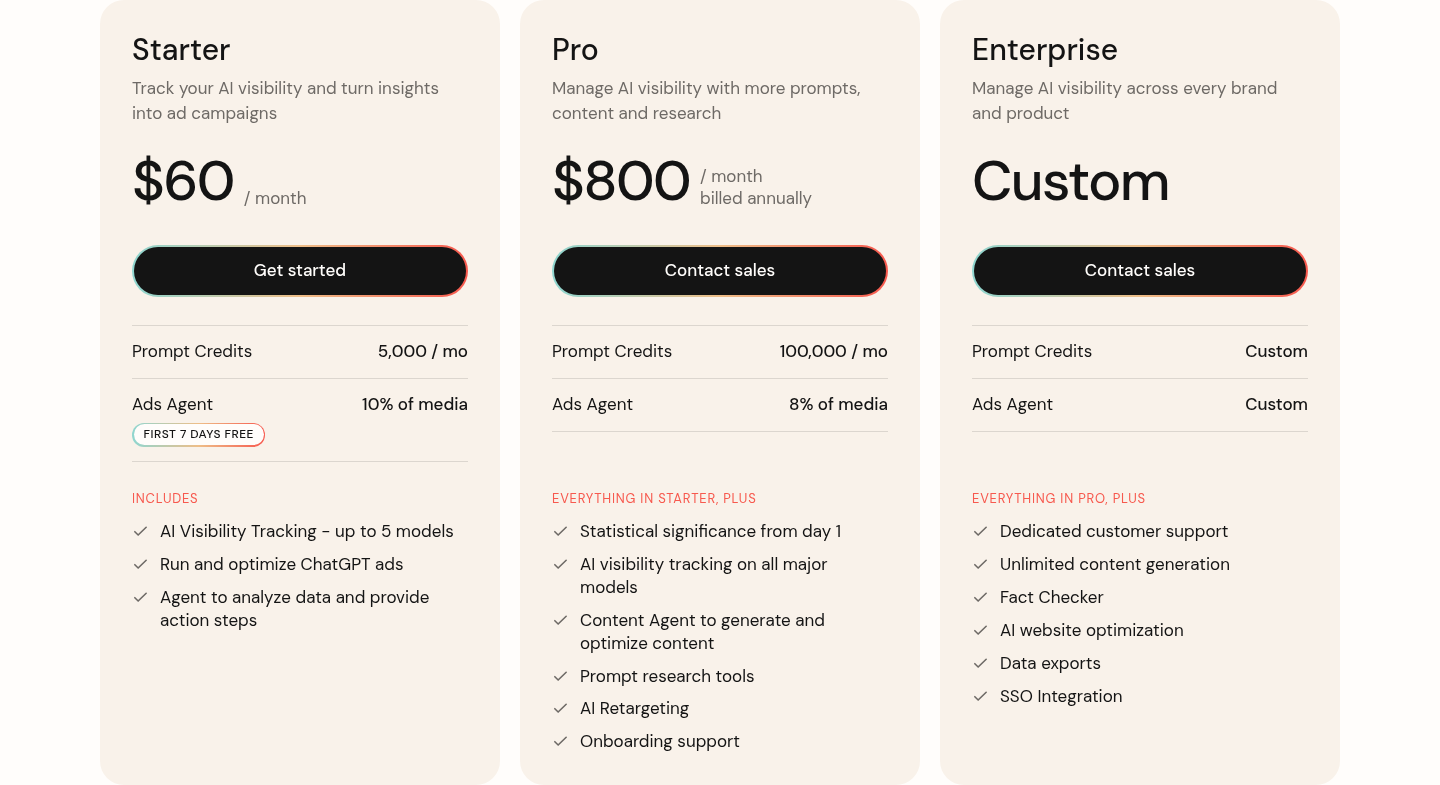
| Evertune | Starter at $60/month; Pro at $800/month billed annually; Enterprise custom | Starter includes 5,000 monthly prompt credits and up to five AI models. Pro includes 100,000 monthly prompt credits and up to 11 models. |
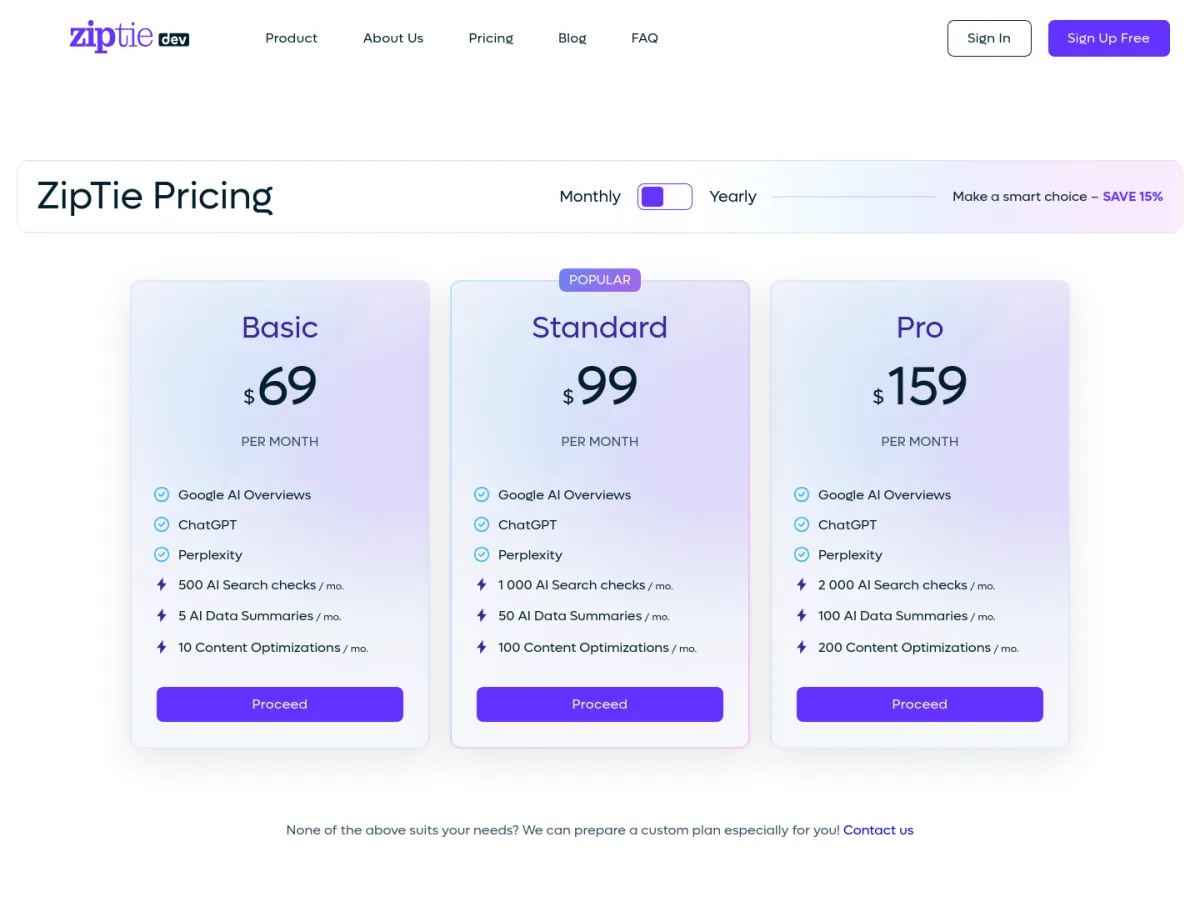
| ZipTie | Basic at $69/month, Standard at $99/month, Pro at $159/month | Basic includes 500 AI search checks per month across Google AI Overviews, ChatGPT, and Perplexity, plus data summaries and content optimizations. |
| Bluefish AI | No public pricing page found | Treat it as a sales-led enterprise evaluation rather than a self-serve pricing comparison. |
Use Rankscale as the actionability baseline
Rankscale belongs in the part of the market that promises more than visibility measurement. Its public positioning connects AI presence tracking with optimization recommendations. That makes it a useful baseline when the buyer wants the tool to produce work, not only reporting.
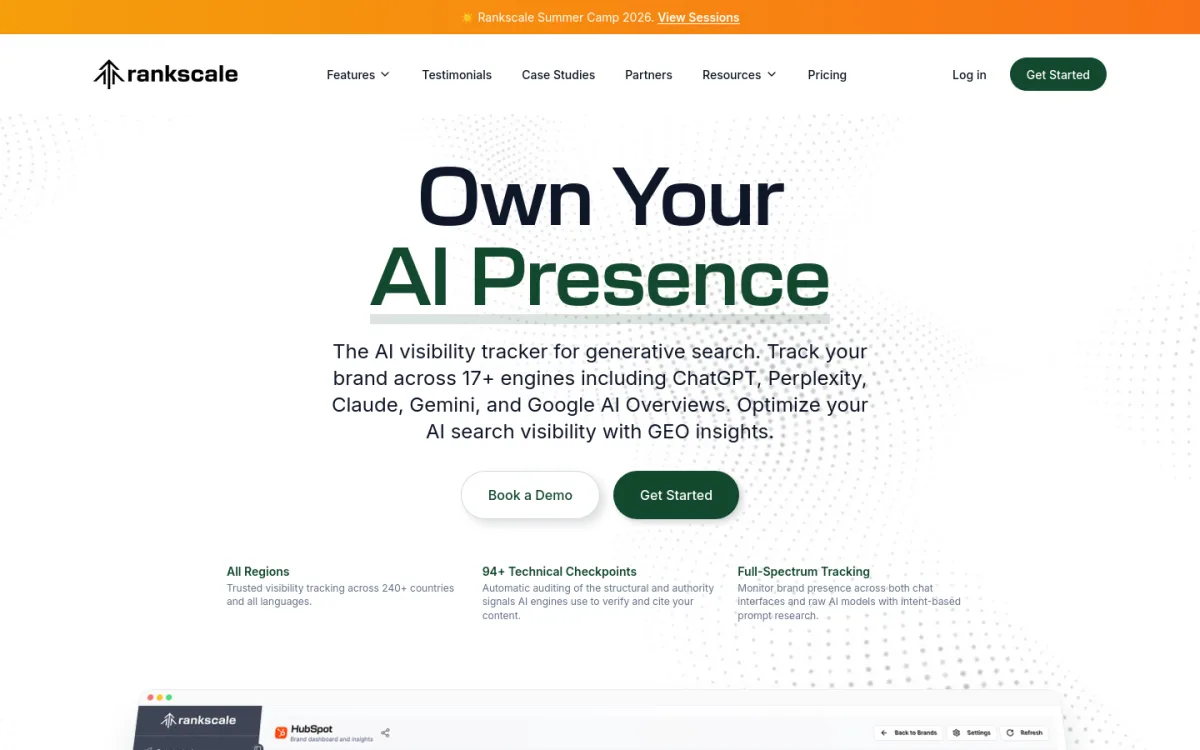
When you compare Rankscale alternatives, do not stop at whether each tool tracks ChatGPT, Perplexity, Gemini, Claude, or Google AI answers. Ask what happens after the tool finds a weak prompt group. The output should point to a page, source, comparison, pricing fact, documentation gap, or third-party mention you can improve.
What to look for in a Rankscale alternative
Does it explain the recommendation?
Recommendations are only useful if the team can trust the reasoning. Ask vendors to show the prompt, answer, competitor, cited or consulted sources, and the exact page-level action they recommend. A vague "optimize this topic" is not enough.
Does it separate visibility from action?
A brand can be invisible because its site is vague, because competitors dominate third-party lists, because pricing is unclear, or because the prompt is not a real buyer question. The alternative should help you diagnose which problem you have before it asks you to rewrite pages.
Can it serve both content and leadership?
Content teams need a backlog. Leadership needs a trend: which prompts the brand leads by mention frequency, where it trails, which competitors are gaining, and whether the work is changing visibility. If you need both, compare recommendation depth and reporting depth separately.
Is the pricing aligned with your learning stage?
If you are still proving AI visibility internally, public pricing and a small prompt set may matter more than enterprise polish. If the category already has executive attention, governance, exports, account support, and market coverage may matter more than entry price.
Rankscale alternatives comparison
| Tool | Best for | Public pricing seen? | Main strength | Main caveat |
|---|---|---|---|---|
| Profound | Enterprise AI visibility reporting | Free trial; paid plans custom | Stronger enterprise measurement and competitive intelligence positioning | May be more platform than a content team needs |
| AthenaHQ | Broad AI visibility platform comparison | Yes | Direct category comparison with public plan context | Needs validation on recommendation depth |
| Scrunch | AI-ready website and content work | Yes | Strong site-readiness angle for AI search | May not replace broad competitive reporting |
| OtterlyAI | Lower-cost monitoring | Yes | Easier to test if the team mainly needs AI search monitoring | Validate depth before replacing an optimization workflow |
| Evertune | Brand and customer journey intelligence | Yes | Broader framing than prompt monitoring or content recommendations | May be too broad for a narrow GEO workflow |
| ZipTie | AI search visibility dashboard | Yes | Public pricing and focused AI search intelligence positioning | Validate sources, exports, and recommendation depth |
| Bluefish AI | Enterprise generative marketing teams | No public pricing found | Broader enterprise marketing positioning | Less transparent without public pricing or plan limits |
1. Profound
Profound is the strongest Rankscale alternative when the buyer needs enterprise AI visibility measurement. It is a better fit when executive reporting, competitive intelligence, and brand-level visibility matter more than a content team's day-to-day recommendation queue.
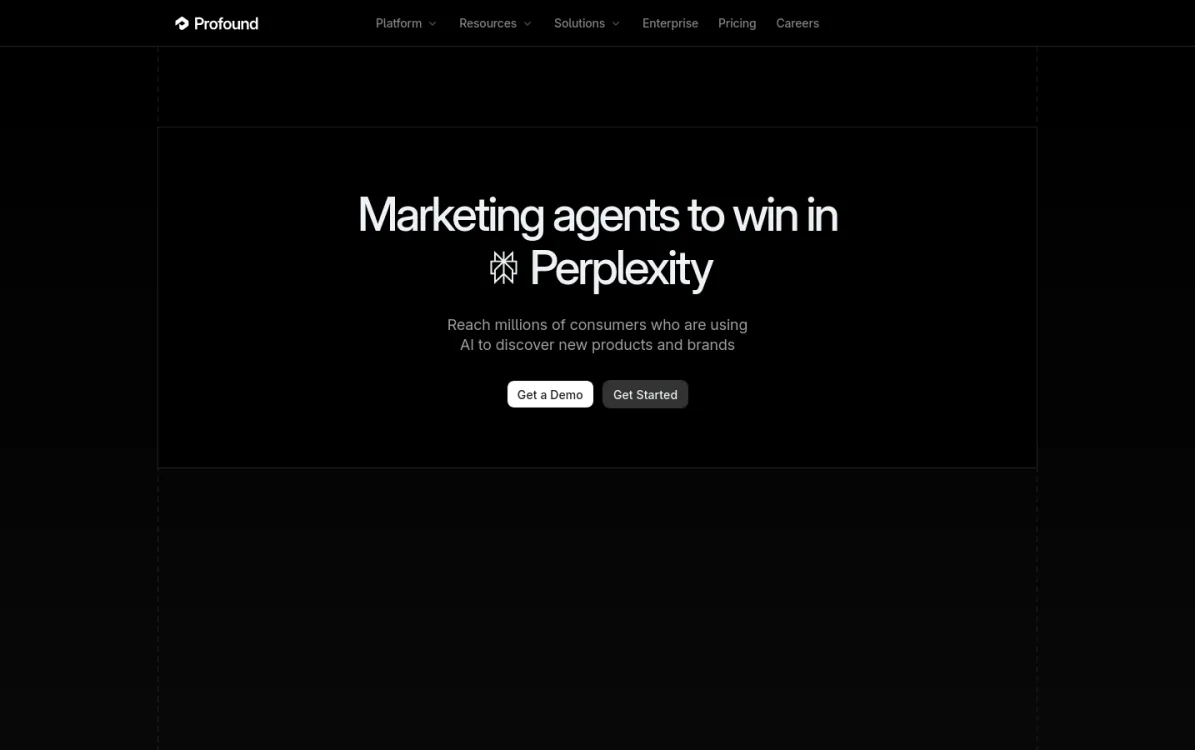
Test Profound against Rankscale with the same prompts and competitors. The key question is whether you need stronger reporting or stronger action recommendations.

2. AthenaHQ
AthenaHQ is a direct category comparison when you want a broad AI visibility platform but are not sure Rankscale's recommendation angle is the right fit. It should be shortlisted when visibility monitoring and plan structure matter together.
Compare the two by asking each tool to diagnose the same weak prompt. Look for source evidence, competitor context, and whether the recommended action is specific enough to assign.

3. Scrunch
Scrunch is the alternative to test when the team cares about making the website more understandable to AI systems. That is a different workflow from measuring AI presence and then deciding what to optimize.
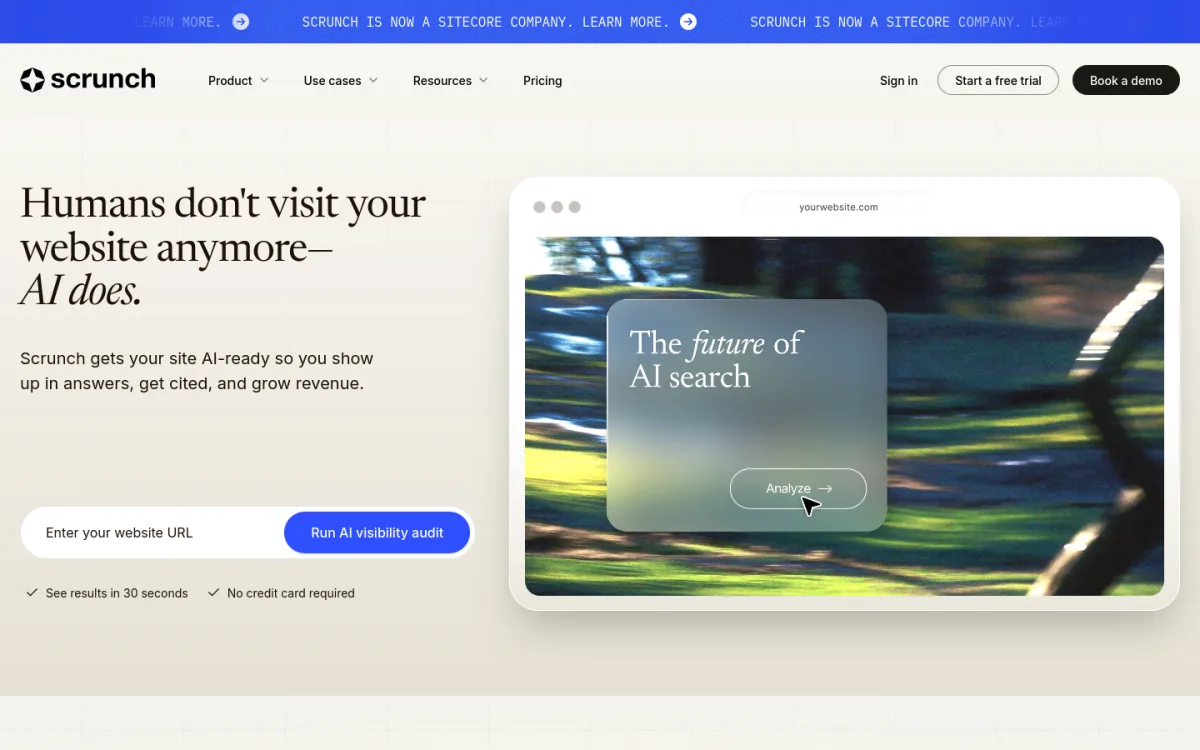
Shortlist Scrunch if your likely actions are homepage edits, page clarity, content structure, and AI-readiness improvements. Validate whether it also gives enough competitive visibility if leadership expects market reporting.
4. OtterlyAI
OtterlyAI is the lighter-weight option when the first job is AI search monitoring. It is useful when you need to prove that repeated prompt tracking creates useful decisions before investing in a broader optimization platform.
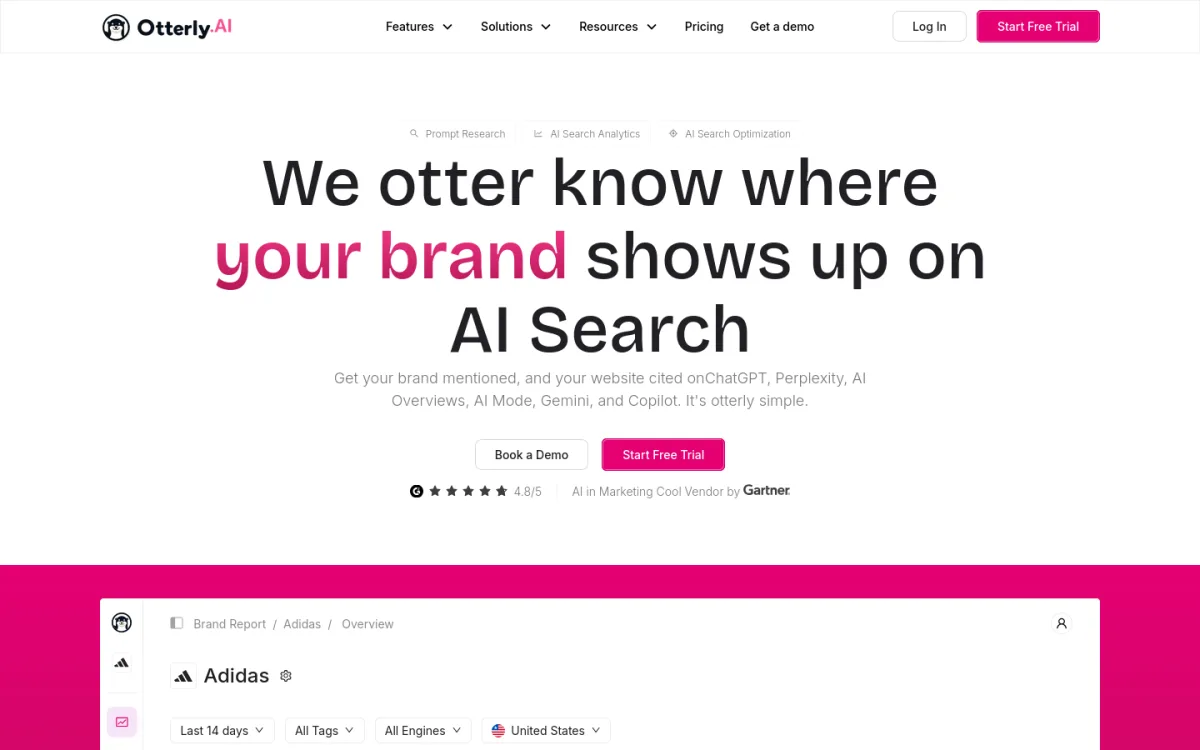
The tradeoff is actionability. Before choosing it over Rankscale, check whether it can explain why prompts are weak and what a content or web team should do next.
5. Evertune
Evertune is a better fit when Rankscale feels too focused on optimization and the real problem is customer journey intelligence. Its public positioning is broader than SEO, GEO, or AI prompt tracking.
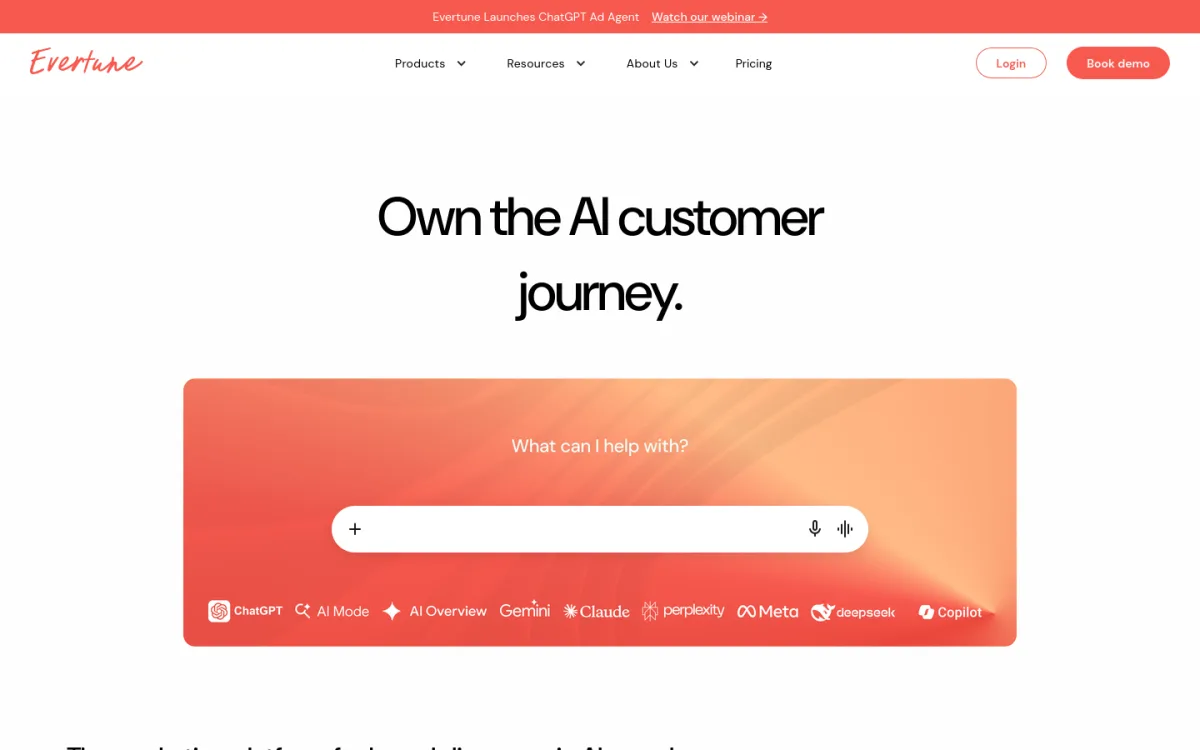
Include Evertune if brand, insights, advertising, or customer journey teams are part of the buying group. Skip it if the team only needs a practical content optimization queue.
6. ZipTie
ZipTie is another focused AI search visibility alternative. It makes sense when the team wants a dashboard and public pricing, but does not yet need a heavier platform or enterprise buying motion.
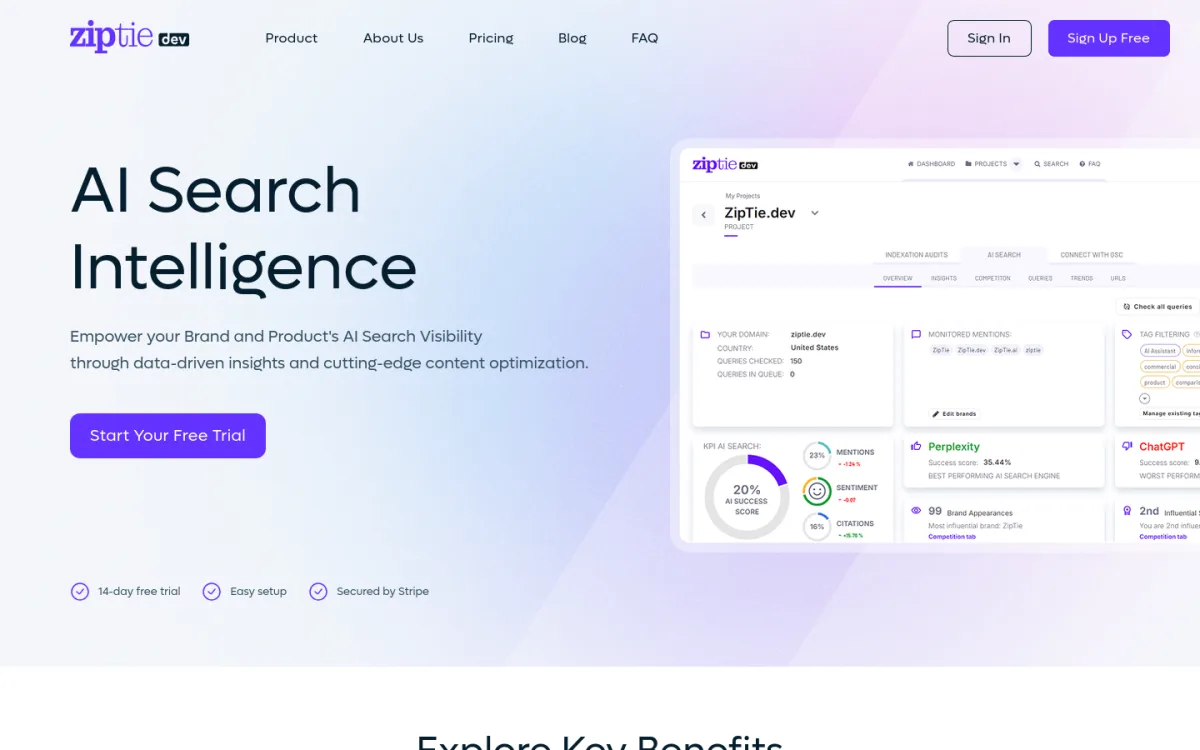
Validate ZipTie on the same actionability questions as Rankscale: can it diagnose weak prompts, show sources, compare competitors, and export data that another team can use?
7. Bluefish AI
Bluefish AI is the broader enterprise marketing option. It is less transparent for self-serve buyers because public pricing was not visible.
Shortlist it when the buying question is bigger than AI search visibility. If you need transparent pricing and a practical optimization workflow, it probably belongs later in the evaluation.
How to choose a Rankscale alternative
What to test in a demo or trial
Run each alternative against the same Rankscale baseline prompt set. Do not accept a generic dashboard tour; ask the vendor to explain one weak prompt all the way from answer to source to recommended action.
- Import 20 buyer prompts split across category, use-case, competitor, alternative, pricing, and objection questions.
- Add the same five competitors and one market or country in every tool.
- Compare prompt winners (the brand mentioned in the most replies for each monitored prompt), mention share, cited or consulted URLs, and answer accuracy after repeated runs.
- Ask what changed on the website, comparison page, docs, or third-party source would improve the weakest prompt group.
- Export the report and check whether a founder, content lead, or executive can understand the next action without reading every answer.
If leadership needs reporting, compare Profound and AthenaHQ
These are the stronger candidates when AI visibility needs to become an executive reporting habit. Compare coverage, repeatability, competitor views, exports, and whether the reports explain movement over time.
If the website is the work, compare Scrunch and Rankscale directly
Use the same weak prompt group and ask each tool what should change on the site. The better answer should name the page, the missing fact, the source gap, and the expected business reason for the change.
If budget is the constraint, compare OtterlyAI and ZipTie
Public pricing makes these easier to evaluate. Run a small prompt set for a month and decide whether the results change any content, positioning, or source-building work.
If the problem is broader than optimization, include Evertune and Bluefish AI
Broader platforms make more sense when AI visibility is one signal inside brand, journey, media, or customer intelligence. They may be the wrong shape for a team that only needs content recommendations.
Evaluation checklist
- Which AI systems does the tool track?
- Can we bring our own prompts?
- Can prompts be grouped by use case, product, market, country, and persona?
- Does the tool separate mention frequency, prompt winners, citations, and consulted sources?
- Can it show why a competitor is mentioned in the most replies for a prompt?
- Does it recommend page-level actions?
- Does it explain whether the action is content, PR, documentation, pricing, or positioning?
- Can leadership see trends without reading every prompt?
- Can content teams turn the output into a backlog?
- Can we export the data?
- What limits apply to prompts, brands, users, markets, refreshes, and history?
- How does the vendor handle new AI surfaces and changing model behavior?
FAQ
What is the best Rankscale alternative?
Profound and AthenaHQ are stronger fits for broad or enterprise AI visibility reporting. Scrunch is strongest when the workflow is site readiness. OtterlyAI and ZipTie are easier to test when public pricing matters. Evertune and Bluefish AI are better fits when AI visibility is part of a broader brand or marketing intelligence problem.
Is Rankscale mainly an AI visibility tool or an optimization tool?
Based on its public positioning, Rankscale sits between visibility tracking and optimization recommendations. That is why buyers should test recommendation quality, not only platform coverage.
Should I choose a cheaper Rankscale alternative?
Choose a cheaper alternative if you are still proving that AI visibility monitoring changes your team's work. Do not choose only on price if you need diagnosis, recommendations, exports, enterprise reporting, or multi-market coverage.
What should I test before switching tools?
Give each tool the same prompts, competitors, products, and markets. Then compare the diagnosis: which competitors are mentioned most often across repeated runs, which sources influence the answer, what action the tool recommends, and whether the output is specific enough to assign.
Final thoughts
Rankscale is a useful baseline when the buyer wants AI visibility tracking to turn into optimization work. The best alternative depends on what you need more of: enterprise reporting, cheaper monitoring, site-readiness guidance, or broader brand intelligence.
Use the same prompt set across each shortlisted tool. The winner is not the one with the cleanest dashboard. It is the one that explains the gap clearly enough for your team to do something about it.